

What's the difference between high frequency and standard power inductors?
Nov 19, 2026
Leave a message
If you’ve ever dug into power electronics, you’ve probably stumbled on inductors—those unassuming little components that hold the whole grid, your phone, your laptop charger, or even your electric car’s drivetrain together. But if you’re sourcing parts for a new design, you’ve likely run into two common terms thrown around: high frequency power inductors and standard power inductors. At first glance, they might look similar, but pick the wrong one, and you could end up with a design that overheats, drops performance, or even fails entirely. I’ve been on the front lines as a supplier focused on High Frequency Power Inductor for years, working with engineers across everything from consumer tech to industrial automation, and I’ve seen firsthand how mixing these two up can derail even the most promising projects. Today, let’s break down the real differences, why that matters for your next build, and when you should reach for one over the other.
First, let’s get the basics straight. What is a power inductor, anyway? At its core, it’s a passive component made of a coil of wire wrapped around a core material, right? Its job is to store energy in a magnetic field when current flows through it, and then release that energy back when the current drops. That makes it perfect for smoothing out voltage ripples, filtering noise, or storing energy in switching circuits. Standard power inductors have been around for decades, engineered to work reliably at the mid-range frequencies we used to rely on—think 50/60Hz for grid power, or a few kilohertz (kHz) for old-school power supplies. High frequency power inductors, on the other hand, are built for the faster pace of modern electronics, operating at 100kHz, 1MHz, or even tens of megahertz (MHz). That frequency gap might sound small on paper, but it changes almost every part of how an inductor works.
Let’s talk about how core material makes all the difference here, because that’s the biggest split between these two types. Standard inductors almost always use iron cores—like solid iron or ferrite that’s optimized for low-frequency use. Iron is cheap, saturates at high current, which is good for standard power needs, but it’s terrible at high frequencies. Why? Because at higher frequencies, the magnetic field flips back and forth super fast. When that happens, two big issues pop up: core loss and skin effect. Core loss is basically energy lost as heat when the core’s magnetic molecules spin and reorient millions of times a second. Iron gets sluggish at high frequencies, so it wastes a ton of energy heating up instead of transferring it. Standard inductors can’t handle that heat, so you’ll see their efficiency drop fast if you run them above their rated frequency.
High frequency inductors solve that with way better core materials—things like powdered iron, ferrite that’s formulated for MHz ranges, or even nanocrystalline cores. These materials have much lower core loss at high frequencies, so they don’t turn into space heaters when you crank up the speed. They’re also designed to resist saturation at higher frequencies, which is key for modern circuits that pack a lot of power into tiny spaces. For anyone building compact designs—like the slim chargers for your new laptop, or the power converters in electric scooters—this is a non-negotiable. A standard inductor would overheat and die in that small, fast setup, but a high frequency one keeps working smoothly.
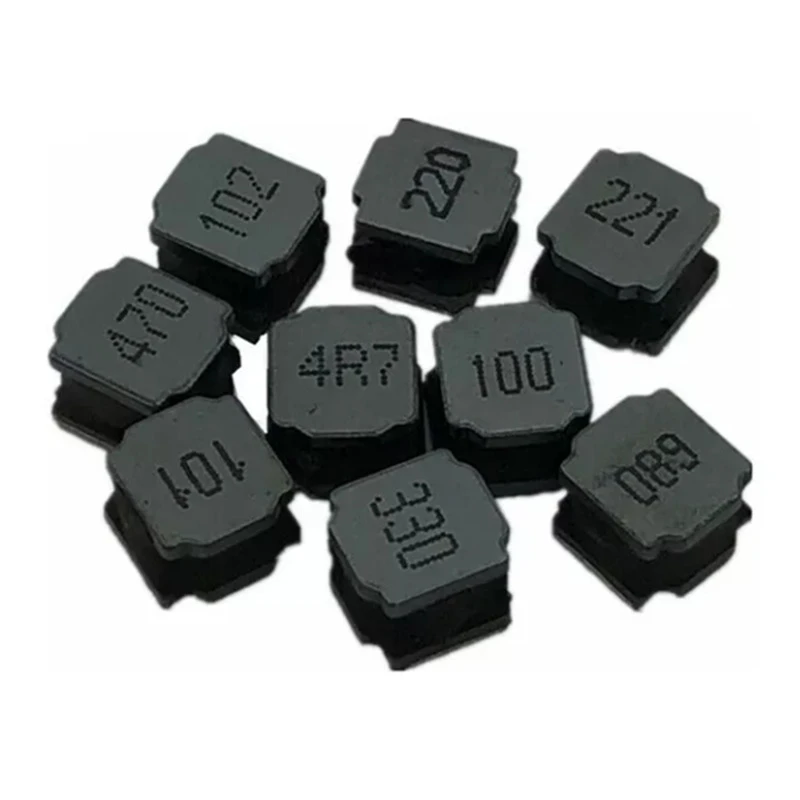
Next up: size and form factor, which is one of the most practical differences for anyone designing products. Older, low-frequency circuits could get away with big, bulky standard inductors. That’s because inductance is tied to how big the core is—lower frequency means you need a bigger core (and more wire) to store the same amount of energy. So back when we ran at a few kHz, your power supply’s inductor was about the size of a fist. Now, we’re pushing circuits to work at MHz frequencies. Higher frequency means you can shrink the core size way down because you’re transferring energy much faster. That’s why your phone’s power management components are the size of a pinhead, not a brick. High frequency inductors take advantage of that—they’re way smaller and lighter than standard inductors for the same power rating. I always tell engineers: if you’re cramming a power supply into a device that’s less than an inch thick, skip the standard inductor. It won’t fit, and if you force it, it’ll cost you performance and reliability.
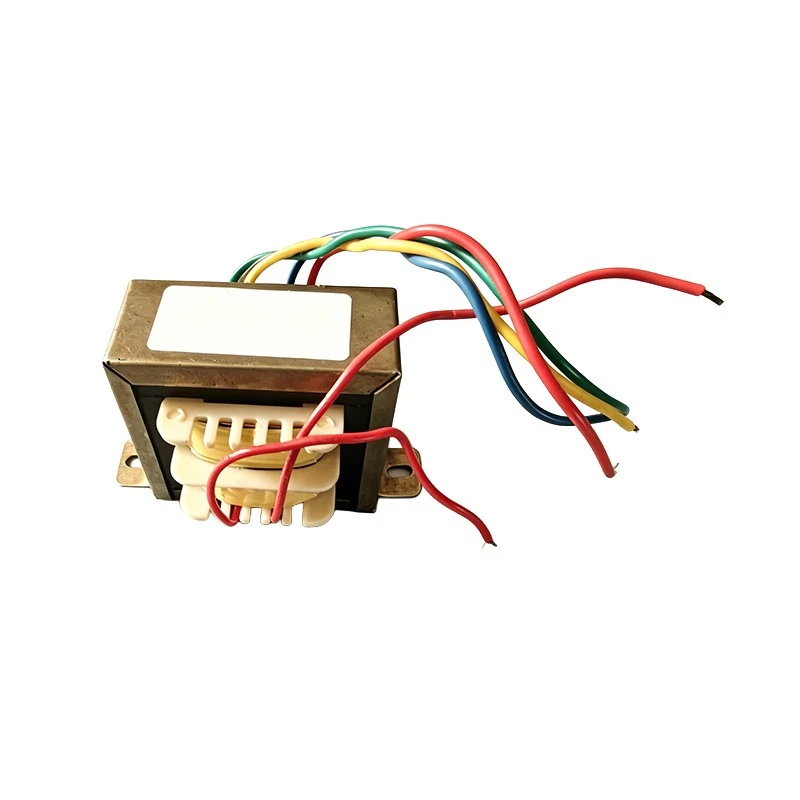
Wait, but size isn’t just about being tiny. There’s a tradeoff there too. Standard inductors might be bigger, but they can handle higher currents at lower frequencies without breaking a sweat. If you’re building a heavy-duty industrial power system, like a motor drive that runs at 60Hz and needs thousands of watts, a standard inductor’s big iron core can handle that load without the extra complexity of high frequency components. High frequency inductors, while smaller, have a lower maximum current rating for the same overall size. That’s not a flaw—it’s a design choice. They’re optimized for speed and compactness, not raw brute power. For heavy, low-frequency applications, you’re still better off with high power inductors built for that exact use case, which you can check out more about at High Power Inductor.
Then there’s noise and filtering, which is a big one for signal integrity. Inductors are used all the time for filtering—either smoothing out power ripples (called a choke) or blocking unwanted noise from getting into a circuit. Standard inductors work fine for low-frequency noise, but at high frequencies, they actually become less effective at filtering because of that core loss I mentioned earlier. Plus, they can introduce their own electrical noise if they’re not designed for high frequency use. High frequency inductors, by contrast, are tuned to suppress both high-frequency power noise and electromagnetic interference (EMI), which is a huge deal for modern devices that have to meet strict regulatory standards. If you’re designing a medical device that needs to be super quiet to avoid interfering with sensitive sensors, or a communication device that can’t drop signal due to noise, high frequency inductors are the way to go. There are even specialized inductors for filtering, like the AC choke coil, which you can learn more about at Ac Choke Coil, designed specifically to block AC noise without messing with power delivery.
Let’s also talk about use cases, because that’s where the rubber meets the road. When would you pick a standard inductor, and when is high frequency non-negotiable? Standard inductors still have their place. Old grid-tie power systems, large industrial motor drives, low-frequency transformers, or any application that needs high power at low frequency and doesn’t care about size can benefit from standard inductors. They’re cheaper, simpler to source, and have a proven track record that’s hard to beat for those use cases. But if you’re working on anything modern? The list is long. Fast-switching power supplies for laptops, phones, and tablets—all use high frequency inductors to get that slim profile. Electric vehicle on-board chargers and battery management systems rely on them to handle high power in tight spaces without overheating. Wireless charging systems, which operate at MHz frequencies, absolutely can’t use standard inductors—their cores would generate so much heat they’d melt the charging pad. Even consumer electronics like smart watches use high frequency inductors to keep their tiny power systems running efficiently. And if you need an inductor that can even adjust its inductance on the fly for different use cases, a tunable inductor like the one at Tunable Inductor combines high frequency performance with flexibility, which is perfect for adaptive circuits.
I’ve seen a lot of engineers make the mistake of assuming all inductors are the same, just grab the cheapest one that fits their power rating, and end up paying for it later. Last year, I worked with a startup that was building a new portable gaming laptop. They tried to use a standard power inductor because it was cheaper, not realizing that at the 1MHz frequency their power supply ran at, the standard inductor was wasting 15% of its energy as heat. Their laptop would get so hot under load it would throttle performance, and their battery life was way worse than competitors. Swapping in a high frequency power inductor fixed all of that—efficiency jumped to over 95%, the laptop stayed cool, and battery life improved by 2 hours. That’s the kind of hit or miss you can avoid by knowing the difference.
Of course, it’s not all black and white. There are hybrid designs that use both, depending on the circuit’s needs. For example, a high-voltage power supply might use a standard inductor for the low-frequency side and a high frequency one for the switching stage. The key is matching the inductor to your circuit’s frequency, power requirements, and size constraints. That’s why doing a quick frequency check for your design is non-negotiable before you source components.
If you’re still not sure which inductor you need, remember this: if your circuit runs above 100kHz, needs to fit in a small space, or is part of a modern device (phones, EVs, wireless chargers), go high frequency. If it’s a low-frequency, high-power system that can handle a big, bulky part, standard is still the way to go. And don’t forget that inductors are just one part of the broader world of inductive components—you can explore all the options at Inductive Component to see what fits your needs.
At the end of the day, the difference between high frequency and standard power inductors isn’t just a technical detail—it’s what makes your design work as intended. Picking the right one keeps your device efficient, reliable, and small, while picking the wrong one leads to wasted energy, overheating, and missed performance goals. I’ve spent years refining high frequency power inductors to solve exactly those kinds of problems for engineers, and I’m always happy to walk through your project to help you pick the right component. If you’re sourcing inductors for a new design, or just have questions about performance, reach out to discuss your specific needs.
References:
- Rashid, M. H. (2017). Power Electronics: Circuits, Devices, and Applications (4th ed.). Pearson.
- Mohan, N., Undeland, T. M., & Robbins, W. P. (2003). Power Electronics: Converters, Applications, and Design (3rd ed.). John Wiley & Sons.
- Bose, B. K. (2006). Power Electronics and Motor Drives: Advances and Trends. Elsevier Academic Press.
- Skvarenina, T. L. (2002). The Power Electronics Handbook. CRC Press.
Send Inquiry